Rabby Browser Wallet and Transaction Simulation: What DeFi Security Can—and Cannot—Tell You Leave a comment
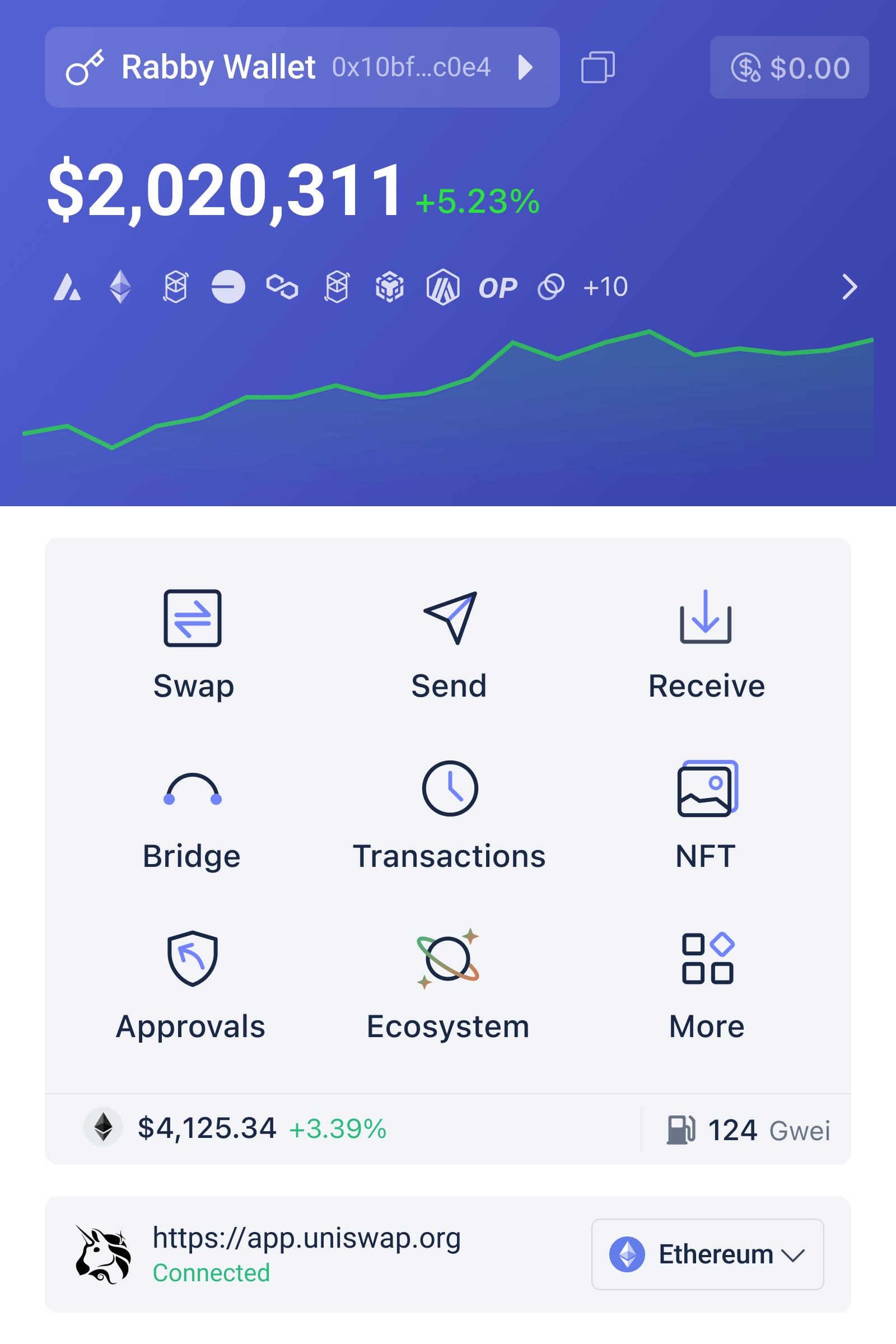
You are about to approve a DeFi transaction on a familiar-looking website. The wallet shows a token swap, the network appears correct, and the amount seems reasonable. Then one question matters more than the interface design: what will this signature actually do? For users moving between Ethereum, Arbitrum, Base, Polygon, Optimism, Avalanche, or the BNB Chain, that question is difficult because the same wallet address can interact with very different contracts across many networks. Rabby’s central idea is to make this moment more legible through transaction simulation and risk warnings. That is useful—but it is not the same as making a transaction safe by default.
This distinction is important for DeFi users in Germany and across the wider European market. A wallet is not merely a digital key ring. It is also an interpretation layer between a human and programmable financial infrastructure. The better that layer explains contract calls, token approvals, expected balance changes, and network context, the less a user must infer from opaque hexadecimal data. Yet the final security decision still depends on the contract, the front end, the device, and the person signing.
The first misconception: a simulation is not a guarantee
Rabby performs a pre-signing simulation intended to show the expected changes to token balances before the transaction is confirmed. In practical terms, the wallet asks the relevant blockchain environment to execute the proposed action in advance, without committing it on-chain. The result can help reveal whether a swap appears to deliver the expected asset, whether a transfer spends more than intended, or whether a contract interaction produces an unfamiliar approval or balance change.
The non-obvious value is not simply that the wallet displays more information. It changes the user’s task from reading implementation details to comparing an intended outcome with an observed outcome. “I want to exchange one amount of USDC for ETH” can be compared with “the simulation indicates that USDC will leave, ETH will arrive, and a contract will receive permission to spend a token.” This is a more useful mental model than treating the confirmation window as a ceremonial final click.
However, simulations have boundaries. They are conditional executions based on the current state, selected network, available data, and assumptions about how the transaction will be processed. State can change before inclusion: prices move, liquidity shifts, a protocol’s accounting changes, or another transaction alters the contract. A simulation may also clarify the result of the call without establishing that the protocol itself is economically sound. It cannot turn a malicious contract into a legitimate one, and it cannot remove smart-contract, bridge, oracle, or market risk.
There is also a subtle human-factors risk. A clean green warning or a familiar balance summary can create false confidence. Security tools are strongest when treated as evidence, not as an authorization stamp. If the website is a phishing copy, the requested action is an unlimited approval, or the user is being rushed into signing, a simulation should prompt investigation rather than automatic approval.
Why a multi-chain wallet changes the security problem
Rabby is designed as a non-custodial wallet for DeFi and supports more than 140 EVM-compatible networks, including major chains such as Ethereum, Polygon, Arbitrum, Optimism, Avalanche, Base, and BNB Chain. Non-custodial means the private keys remain under the user’s control. According to the project information, keys are stored locally on the user’s device rather than transmitted to Rabby’s servers. This reduces dependence on a central custodian, but it also transfers responsibility to the user: a compromised device, exposed seed phrase, or fraudulent signature is not repaired by the wallet provider.
Multi-chain convenience introduces a different class of operational error. The same asset symbol may represent different contracts on different chains. A bridge transaction may involve several contracts and an intermediary route. A dApp may request a network switch automatically, which removes manual friction but can also make the change less noticeable. Rabby’s automatic network switching is therefore a usability improvement with a verification obligation attached to it. Before signing, check the chain name, the asset contract where relevant, the recipient, and whether the action is a direct transfer, a swap, a bridge, or an approval.
This is one reason an independent wallet-side review matters. Rabby does not create or alter transactions on behalf of the user; it acts as a checking and signing interface. Core signing functions can remain available even if Rabby’s own servers are unavailable, because the wallet is not a custodial account dependent on a backend holding the keys. That architecture is a meaningful resilience property, but it should not be confused with complete independence from infrastructure. A wallet extension still runs on an operating system and browser, depends on network access for many dApp interactions, and displays information generated from external protocols and blockchain data.
The comparison with MetaMask is best understood as a difference in emphasis rather than a claim that one tool eliminates all risk. Rabby positions itself as an alternative with a strong focus on multi-chain DeFi workflows, simulation, and expanded warnings. Its open-source MIT-licensed architecture allows community inspection, which is valuable for transparency. Open source, though, is not a magic shield: code review quality, release integrity, dependency security, and user installation practices still matter.
Security features work as a layered system
Rabby’s integrated security engine is intended to flag issues such as phishing, known hacks, suspicious addresses, and potentially dangerous infinite token approvals. These warnings are particularly relevant because token approvals often outlive the transaction that created them. A user may approve a protocol to spend a token once and forget that the permission remains available until revoked or otherwise limited. In risk-management terms, the danger is not only the immediate transaction; it is the persistence of authority.
The wallet’s hardware-wallet compatibility with devices such as Ledger, Trezor, and OneKey adds another layer. A hardware wallet can help keep signing keys isolated from a general-purpose computer, reducing the impact of some malware scenarios. It does not, however, verify whether the user understands the contract call. Hardware confirmation of a bad transaction remains a bad transaction. The strongest setup combines isolated key storage with careful review of the destination, network, approval scope, and simulated result.
Rabby also integrates bridges such as LI.FI and offers an internal swap aggregator that can compare routes involving services such as Uniswap and 1inch. These features can reduce the need to visit multiple websites and may improve execution choices around price and slippage. But aggregation concentrates convenience at the interface level while preserving the underlying protocol risks. A bridge route can involve more than one contract and more than one failure point; a better quoted exchange rate does not automatically mean a lower total risk.
The Gas Account feature, which can allow fees to be paid with stablecoins such as USDC across networks, addresses a familiar practical problem: users may hold the asset they want to transact with but lack the chain’s native token for gas. That is convenient, especially for people operating across several EVM networks. The trade-off is conceptual clarity. Gas is still being paid somewhere through a service mechanism, and the user should understand the fee, conversion, and network conditions rather than interpreting stablecoin payment as fee-free activity.
Even the Rabby Points programme deserves a security footnote. Rewards for swaps, gas top-ups, or referrals may encourage exploration, but incentive systems can also encourage unnecessary transactions. A rational rule is simple: never take on smart-contract, bridge, or approval risk merely to collect points. The expected value of a reward is not meaningful if the activity increases the user’s attack surface.
A reusable review method for DeFi transactions
Before signing, treat the wallet as a decision aid and run a short four-part check. First, verify context: is the browser address the genuine dApp, and is the selected network the one you intended? Second, inspect authority: is this a transfer, a swap, a bridge, or an approval, and how much spending power is being granted? Third, compare the simulation with your goal: which assets leave, which arrive, and what fees or residual permissions remain? Fourth, examine the reason for urgency. Unexpected pressure, a promise of guaranteed yield, or a request to disable warnings is itself a risk signal.
This method also helps separate three different questions that are often collapsed into one. “Will the transaction execute as described?” is partly a simulation question. “Will the protocol behave safely over time?” is a smart-contract and governance question. “Can I recover if something goes wrong?” is a custody and operational question. No single wallet feature answers all three. Rabby is most useful when it improves the first question while helping the user notice evidence relevant to the other two.
For larger balances, a sensible arrangement is to keep a hardware wallet for signing and use a separate, lower-value hot wallet for experimentation. Keep the browser and operating system updated, install wallet software only from trusted sources, and protect the seed phrase offline. A wallet’s local key storage means that the recovery phrase is ultimately the decisive backup. If it is copied into a website, cloud note, or chat, the advantages of non-custody can be undermined in seconds.
What to watch as wallet interfaces mature
Recent project messaging presents Rabby as a wallet for Ethereum and EVM activity that aims to combine speed, broad chain coverage, and on-chain security review. The important development to watch is not whether interfaces become more polished, but whether their explanations become more faithful to complex transactions. As DeFi routes combine swaps, bridges, approvals, and automated actions, a useful wallet will need to communicate not just a predicted balance change but also who receives permissions, which contracts are involved, and which assumptions could invalidate the preview.
If that direction succeeds, transaction simulation could become a standard safety habit rather than a specialist feature. The conditional implication is positive: clearer previews may reduce accidental approvals and chain-selection mistakes, particularly for users working across many EVM networks. But the evidence required for confidence is practical rather than promotional—consistent accuracy across changing protocol states, understandable warnings, and interfaces that do not train users to click through alerts. The unresolved issue is how much complexity can be compressed without hiding risk.
FAQ: Rabby wallet and transaction simulation
Does Rabby make DeFi transactions safe?
No. Rabby can simulate expected outcomes, identify certain warning signs, and make approvals or balance changes easier to inspect. It cannot guarantee that a contract is honest, that a bridge will work, that prices will remain stable, or that a user’s device is uncompromised. It is best viewed as one layer in a broader security process.
Is Rabby suitable for users who already use MetaMask?
It can be considered as an alternative, particularly for users who regularly move among EVM chains and want stronger transaction previews and warnings. The decision should depend on workflow, device security, hardware-wallet support, and comfort with the interface—not on the assumption that switching wallets removes protocol risk.
Why can a transaction simulation differ from the final result?
A simulation reflects a particular blockchain state and transaction context. Before the transaction is included, prices, liquidity, balances, permissions, or contract state can change. Slippage settings and protocol mechanics also matter. The simulation is therefore a forecast of execution under stated conditions, not a binding promise about the future block.
The practical conclusion is deliberately narrower than “use a secure wallet and worry no more.” A rabby wallet can make the signing moment more informative, especially when DeFi activity spans many EVM networks. Its real contribution is the separation of intention from execution: the user can compare what they meant to do with what the transaction appears likely to do. That sharper comparison is valuable. It becomes security only when paired with disciplined verification, limited permissions, protected keys, and a willingness to reject a transaction that remains unclear.